Aboriginal Health Council members speak about closing the gap
19 March 2026
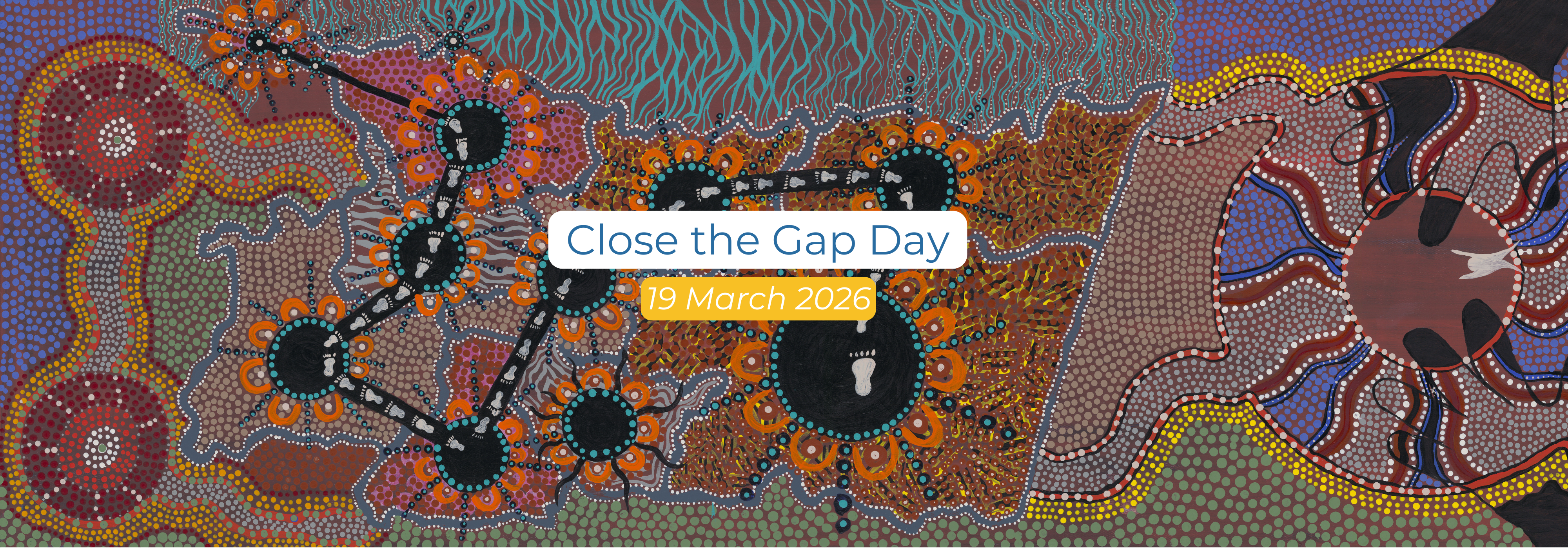
National Close the Gap Day, 19 March 2026, focuses on achieving health equality and better life outcomes for Aboriginal and Torres Strait Islander peoples.
Closing the Gap is underpinned by the belief that when Aboriginal and Torres Strait Islander people have a genuine say in the design and delivery of policies, programs and services that affect them, better life outcomes are achieved.
In supporting the National Agreement on Closing the Gap, COORDINARE has two Aboriginal Health Councils with representation across the northern and southern regions of COORDINARE’s geographic boundaries. These Councils:
- provide advice to COORDINARE's Board on matters relating to Aboriginal health strategies including implications for program design, service approaches and professional development;
- assist in identifying gaps, barriers, strengths, and opportunities for improvement in the delivery of primary health care to local Aboriginal communities;
- provide advice and review relevant policy documents with respect to cultural safety;
- advise COORDINARE on strategies to assist the uptake and adoption of best-practice models of care to provide Aboriginal communities with better access and engagement with primary health services.
Recently COORDINARE spoke with members of the Councils about why they joined and what they hope to achieve:
Karen Shepherd, a proud Wiradjuri woman and Dementia Clinical Nurse Consultant at Illawarra Shoalhaven Local Health District (ISLHD) said, "I have an interest in closing the gap in dementia services for our local Indigenous community. For example, ISLHD’s Outreach Clinics at the Nowra Aboriginal Service have proved a successful alternative Model of Care that has improved attendance, timely diagnosis and outcomes.
“Joining the Aboriginal Council with COORDINARE is an opportunity to work together with like-minded people to explore other innovative ways that we can improve health outcomes for our community,” added Karen.
James Mulholland, CEO of Gawura Aboriginal Corporation said, “I’m hoping to help improve long-term outcomes for the local area, for Aboriginal people in chronic care and early intervention for young people.
“Through the Aboriginal Health Council I want to be a voice to COORDINARE’s Board to show how Aboriginal health needs to be prominent to better meet the closing the gap targets,” said James.
Nikkei Simon, a proud Walbunja and Worimi woman, is Southern NSW Local Health District's Aboriginal Workforce and Development Manager. She said, “I’m working to create meaningful change within a Western health system. My mission is to ensure all Aboriginal people feel physically, culturally, and emotionally safe when accessing the Australian public health system. Education, housing, as well as primary health are three of the things that I'm most passionate about. I believe progress in these areas could really change the lives of Aboriginal people.
“Being on COORDINARE’s Aboriginal Health Council is a great opportunity, there is a really strong place for the voices of Aboriginal people inside COORDINARE’s governance, so I'm happy to be part of that,” added Nikkei.
Ngunnawal Elder Jennie Gordon has been a member of COORDINARE’s Aboriginal Health Council since 2022. Jennie is Project Manager of the SENSW Regional Training Hub, Australian National University Medical School Rural Clinical School.
Jennie said, “I’ve worked in the health system since 1976 so have a lot of knowledge that really needs to be shared. I’m a member of COORDINARE’s Aboriginal Health Council to provide a voice for our local community to ensure that Aboriginal people aren't overlooked.
“I think the biggest key thing that I'm hoping to achieve is to ensure that our communities, particularly across the inland network of southern New South Wales, are actually recognised as places and spaces where Aboriginal people live and where Aboriginal people are entitled to have some level of equity and service provision for health and health needs.”
Paul Knight, inaugural Chair of COORDINARE’s Aboriginal Health Council said, “I’m trying to get people to think differently about health, it's not just about the medications or the processes to deal with a health problem. We need to think about values and what we want to achieve in terms of getting people to live better lives.
“I’m Dharawal-Yuin and country’s a really important thing for me. I've been lucky enough to grow up on country and those connections are something that really keeps me strong in my values and what I can do, in terms of making a difference to the community.
“If we can't keep people healthy in community, they end up in hospitals, and that's the last place they want to be. It’s important people understand health and understand what they can be doing for themselves at that real basic level when they're talking to their GPs. Because that's where they're going really make a difference to their lifespan,” said Paul.
You can read more about the Aboriginal Health Councils here.