
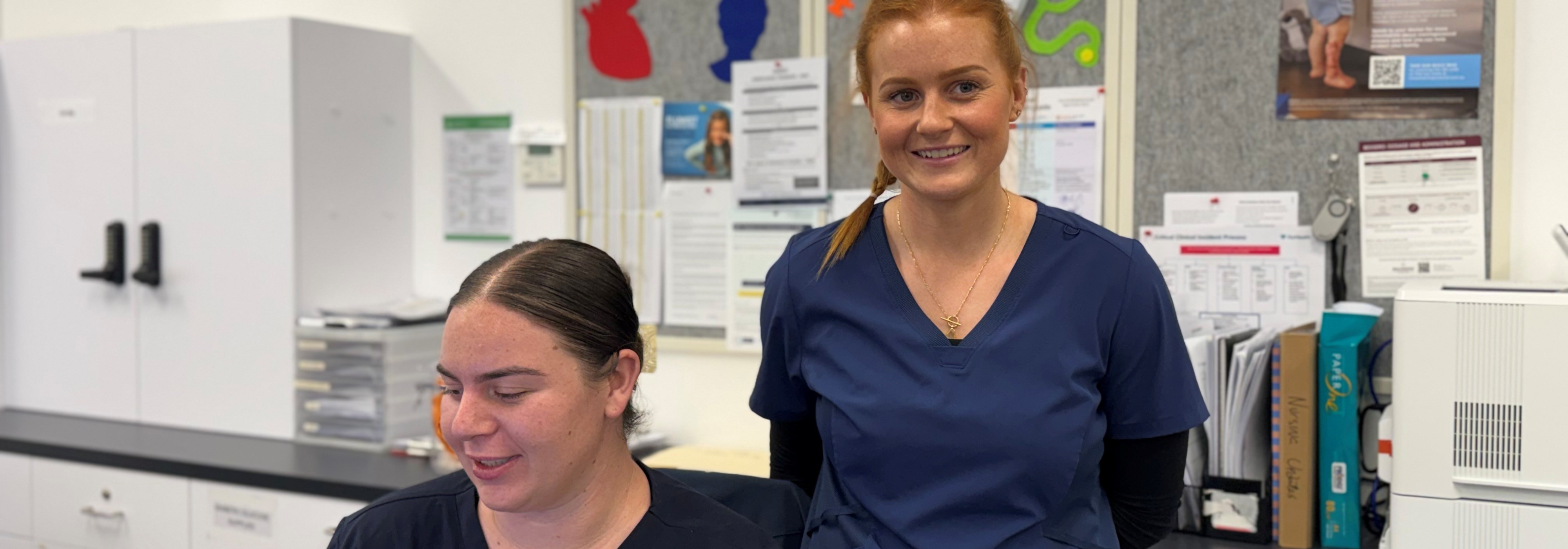
Paramedic skills prove valuable in local urgent care clinics
15 April 2026
An experienced paramedic, Meagan Dawson is one of more than six paramedics bringing their clinical expertise and rapid assessment capabilities to urgent care clinics in South Eastern NSW.
Ms Dawson recently started work at the Dapto Medicare Urgent Care Clinic as a permanent member of the team, following collaboration between the Australasian College of Paramedicine, COORDINARE - South Eastern NSW Primary Health Network (PHN), South West Sydney PHN and ForHealth Group.
The inclusion of paramedics in Medicare Urgent Care Clinics reflects a broader shift toward integrated healthcare, where paramedics bring their unique skill set beyond traditional emergency services and into community-based, person-centred care settings.
COORDINARE’s Acting CEO Juanita Murphy said paramedics have been working in at least 5 of the 7 urgent care clinics in South Eastern NSW since December 2025, following updates to Medicare UCC guidelines. Some paramedics are working casually while others have permanent part time roles.
“It makes sense to explore innovative staffing models to ensure the continued delivery of high-quality urgent care. Our healthcare system is under increasing pressure due to rising demand, workforce shortages and constrained resources.”
“This is a great opportunity for paramedics interested in more flexible working arrangements and the opportunity diversify their role and work to their full scope of practice,” said Ms Murphy.
Originally training in Queensland, Ms Dawson has been a paramedic for nine years, both with NSW and Queensland Ambulance Services in regional and metro settings.
Ms Dawson said paramedic skills are particularly valuable to the busy urgent care environment and complement the skills of registered nurses.
“I think the benefit of having us here is we are able to identify patients who are very unwell or rapidly deteriorating quite quickly and redirect them for more appropriate care. Paramedics are experienced in working with more severe, urgent, life-threatening cases where you have to make rapid decisions about treatment and where a patient needs to go.”
“In urgent care, it's a steadier pace and a more controlled environment in collaboration with doctors and registered nurses, whereas ambulance paramedics need to be able to work autonomously and make quick clinical decisions,” she said.
Ms Dawson said the Urgent Care Clinic role appealed because she has more consistency with a regular workplace plus more space to develop and refine her clinical skills as part of a multi-disciplinary team.
“In urgent care it's a bit of a balancing act as we need to care for and triage multiple patients as they come in, but there there’s more opportunity to assess thoroughly, treat and follow through, rather than needing to make rapid decisions on the road.”
So what would she say to other paramedics who might be considering taking on a similar role at an Urgent Care Clinic?
“It’s a great way to expand your clinical skills and get experience in a different side of healthcare. The most appealing thing about working in urgent care is the better work life balance and no night shifts,” said Ms Dawson.
Ms Murphy added, “The integration of paramedics into multidisciplinary teams in most of the Medicare Urgent Care Clinics in South Eastern NSW is helping to ensure more robust staffing of this vital resource. Bolstering the workforce strengthens each Clinic’s capacity to deliver timely, high-quality wholistic care to patients with urgent but non-life-threatening conditions.”
Locate your closest Medicare UCC here.
See more information about Medicare UCCs in South Eastern NSW here